
To maintain focus on homework, start by removing your phone from reach — not just silencing it.
Then break the assignment into specific tasks. A 25-minute work block with a 5-minute break (Pomodoro method) works better than unbreakable marathon sessions for most students.
This guide covers the main reasons focus breaks down and practical strategies to fix each one.
How Has Homework Focus Evolved in 2026–2027?
Homework habits did not change overnight in 2026. Actually, the change started in 2024, when AI tools and smarter study apps began to enter everyday student life.
Before 2024, most students relied on planners, timers, and self-discipline. Things looked different after that.
AI assistants started helping with explanations, organization, and even planning. The learning process was no longer about guessing what to do next but about following a guided system.
AI Tools Changed the Way Students Study
AI study assistants like ChatGPT and Notion AI became everyday homework tools in no time. Students put them to simple, practical use.
They use these tools particularly to:
- break hard topics into simple steps to make them easy;
- summarize long readings into brief notes;
- generate quiz questions for revision;
- help to structure essays before writing.
Students could ask for explanations or examples and proceed at a faster pace rather than wait for long periods.
Think in terms of “do my homework” to build consistency and avoid delays. When tasks are organized and routine work is automated, homework becomes easier and less stressful.
Smarter Study Systems in 2026-2027
By 2026-2027, study tools will become even more advanced. AI can suggest when to study based on your focus habits, turn notes into quizzes, and even act as a voice tutor.
Many students use these tools alongside simple wellness habits. They also found that short meditation breaks, breathing exercises, and apps such as Calm or Headspace helped them keep calm and maintain focus during long study sessions.
What the numbers tell us
It is important to see the impact of a few easy changes.
A global survey revealed that 86% of students were already employing AI tools for their studies, with about 25% using them daily. One of the most popular study aids has rapidly become ChatGPT.
Research also found that 85% of students received better grades after using AI learning tools. Many said they saved a lot of time doing homework and preparing for exams.
Meanwhile, AI education apps have also seen a meteoric rise, with more than 140 million users worldwide in 2024 alone.
Why this matters now
Homework will not be just working harder by 2026-2027. This is about working smarter.
Now, students combine AI tools, focus apps, and simple routines that align with their own habits.
There was a change in 2024 when studying became better and less stressful. For many students, it also helped them to stay on task and actually get work done in a timely manner.
Why Focusing on Homework Is So Challenging
How to improve focus on homework? Today, it is harder than ever before.
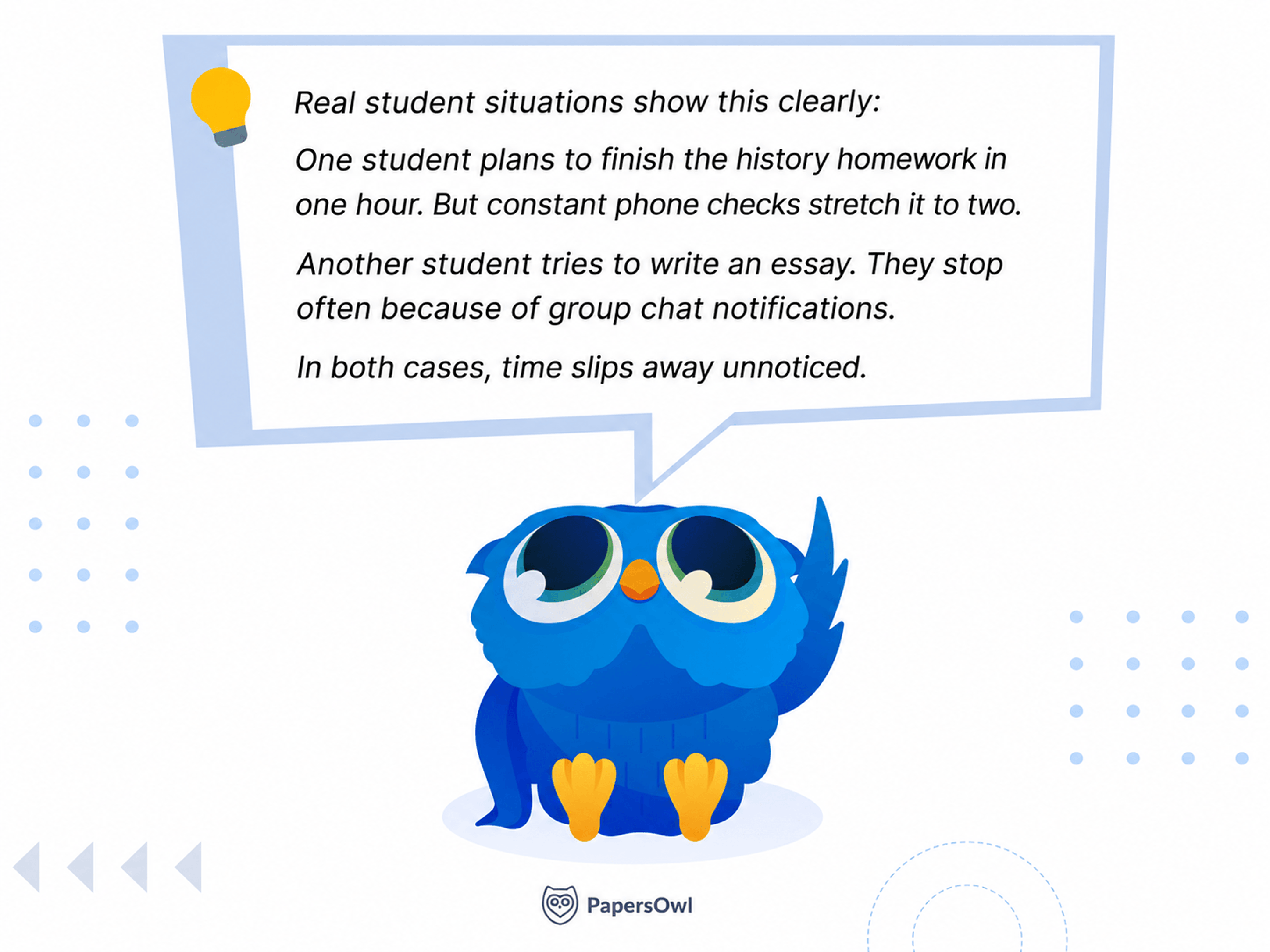
The main reason is the fast, digital environment in which students live. Attention is constantly pulled in different directions. Homework needs calm focus, but daily life rarely offers it.
- Social media is one of the biggest distractions. A student may open TikTok for “just five minutes.” That often turns into half an hour of scrolling. After that, returning to math or reading feels much harder. Instagram and YouTube also keep suggesting new content. This creates an endless loop of switching.
- Notifications add even more pressure. Messages from friends, group chats, and apps interrupt thinking. Even one short alert can break concentration. Studies show it can take several minutes to refocus after a distraction. That time adds up quickly during homework.
- Digital stress also plays a role. Many students feel pressure to respond instantly online. For example, a student may check homework while replying to messages. This creates mental overload. The brain tries to handle too many tasks at once.
- Emotional stress makes focus even weaker. Exams, deadlines, and expectations build anxiety. A student might sit down to study, but keep worrying about grades. This mental noise reduces working memory and slows understanding.
Key Problems Affecting Focus
Some challenges make homework feel heavy and endless. Attention shifts quickly from task to distraction. Stress builds when work is delayed. Lack of structure makes everything feel confusing.
| Key Problem | Explanation |
|---|---|
| 1. Distractions | Social media, notifications, and background noise constantly interrupt attention. |
| 2. Lack of Time | Busy schedules push homework to the end of the day, when energy is low. |
| 3. Stress and Emotional Pressure | Anxiety and mental fatigue reduce concentration and slow understanding. |
| 4. Poor Planning and Structure | Without clear steps, tasks feel overwhelming and harder to start. |
The good news is that focus can be improved, and a few easy changes can make a real difference.
Turning off notifications helps reduce interruptions. Breaking tasks into steps makes it easier to get started. Short study sessions reduce mental pressure.
With simple habits, students can regain control over their attention.
Social Media Control While Studying
Social media is one of the fastest focus killers. The problem is not just usage, but habit loops. One quick check can turn into hours of browsing before you realize it.
5 common focus distractions on the phone:
- You look at TikTok or Instagram during short breaks, and they turn into long scrolling sessions.
- You try to study and answer group chats at the same time.
- You want to watch a “quick one” YouTube video, but it turns into an hour.
- You flip between homework and apps on the phone.
- You worry about grades, read the same page over and over, and still don’t understand it.
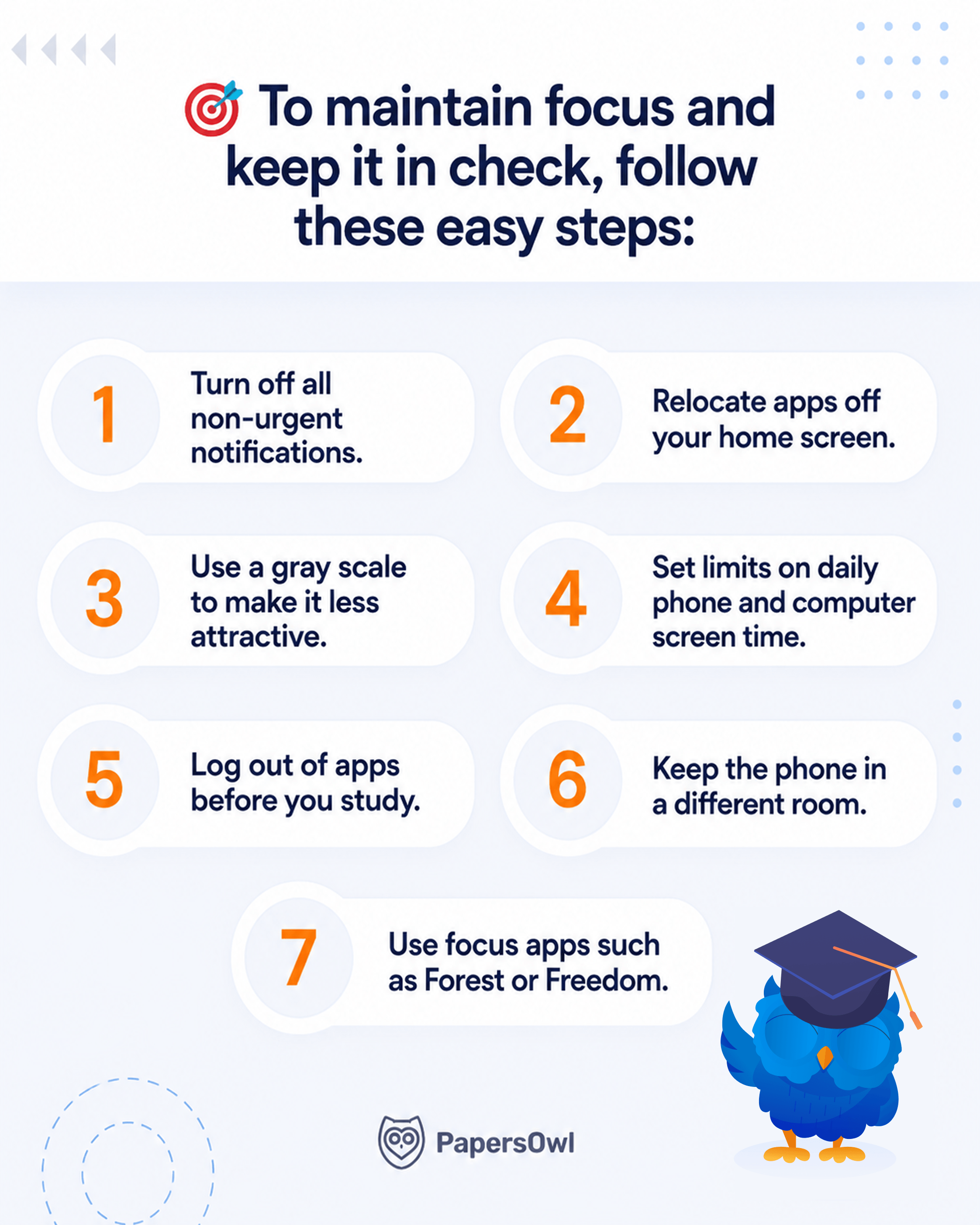
It also helps to “batch check” social media. That means not checking it except during scheduled breaks. Not during study periods.
Many students follow a simple rule: don’t scroll until your homework is done. It builds discipline and reduces temptation.
Your brain gets used to fewer interruptions over time. That way, focus is easier and more stable.
How to Create an Ideal Study Environment?
A good study environment is not only about a clean desk. It is also about how you feel and how you manage yourself.
How to focus better on homework? This depends on space and habits. If one of them is weak, concentration drops quickly.
A comfortable physical space
Your body affects your focus more than you think.
- Ergonomics (Keep comfort and posture). Sit in a chair that supports your back. Keep your feet on the floor. Your screen should be at eye level. This helps avoid neck pain and tiredness. When your body feels fine, your mind stays clearer.
- Lighting (Avoid fatigue). Natural light works best during the day. If that is not possible, use a soft white desk lamp. Dim light makes you sleepy. Too bright light can strain your eyes. Balanced lighting helps you stay alert longer.
- Sound (Reduce interruptions). Noise is one of the fastest focus killers. Try to study in a quiet room. Close the door if possible. If the environment is loud, use headphones. Some students maintain focus better with white noise or calm background sounds.
Simple rules for better discipline
A good workspace is not enough without self-control. Discipline makes everything work better.
Try these simple habits:
- Write down homework for today and this week.
- Start with the hardest task first.
- Break big assignments into small steps.
- Work in short, focused sessions.
- Take short breaks after studying.
- Keep your phone away during study time.
- Check your progress, not just your time.
These small steps reduce stress. They also make not manageable tasks feel easier to start.
Build a study routine that works
Your brain likes routine. If you study at the same time every day, it becomes easier to maintain focus. It feels less like a struggle and more like a habit.
Before you start, prepare your desk. Keep only what you need. A clear space helps you think more clearly. Less clutter means less distraction.
Here’s How to Plan and Structure a Productive Study Routine
Planning your study routine is like building a simple map for your day. You decide what to do, when to do it, and how long it should take. This removes guesswork and helps you focus on homework without feeling overwhelmed.
Some students like apps such as OneNote or Todoist. Others prefer something simpler. A paper planner, Google Calendar, or even a basic spreadsheet works well. Writing tasks down makes them feel clearer and easier to start.
Time-based planning that actually works
Good planning is not only about listing tasks. It is also about using time wisely. When everything has a time slot, it feels more controlled and less stressful.
Try to:
- Set clear time blocks for each subject.
- Start with harder tasks when energy is high.
- Keep study sessions around 25–45 minutes.
- Take short breaks between sessions.
- Avoid jumping between tasks too often.
This helps your brain stay on one task. It also makes big assignments feel smaller.
Small habits that support focus
Your routine works better when you support it with simple habits. These small things can improve energy and concentration.
For example:
- Listen to calm music like classical or lo-fi.
- Take short walks between study sessions.
- Drink water regularly.
- Stretch to reduce tension.
- Prepare your desk before starting.
These breaks are not wasted time. They help your brain reset and stay focused longer.
Plan around your energy
Focus is not the same all day. Some hours feel easier than others. Use that to your advantage.
Think about:
- When do you feel most alert?
- Which subjects feel hardest?
- What distracts you most often?
Do difficult work when your energy is high. Save easier tasks for later. This makes studying feel smoother and less tiring.
Large tasks also become easier when you break them down. Start with ideas. Then move to structure. Finish by writing step by step.
Simple support for students with ADHD
Students with ADHD often need more structure but simpler steps. Long study plans usually do not work well.
What helps more:
- Short study blocks of 10–20 minutes.
- Clear timers for each task.
- Very small, step-by-step assignments.
- Visual checklists to track progress.
- Removing phone distractions during study time.
- Quiet and simple study spaces.
Movement also helps. Standing up, stretching, or walking for a minute can reset focus. It is better than forcing long periods of sitting.
A small “start signal” can also help you stay motivated. For example, putting on headphones or opening a notebook. This tells your brain it is time to begin and helps you shift into focus mode more easily.
5 Effective Time Management Strategies
There are many apps and study methods available today. But no single system works for everyone. Each student needs a simple approach that fits their routine.
What matters most is consistency and clarity. How to focus on homework without getting distracted depends on building habits that reduce interruptions and support steady attention.
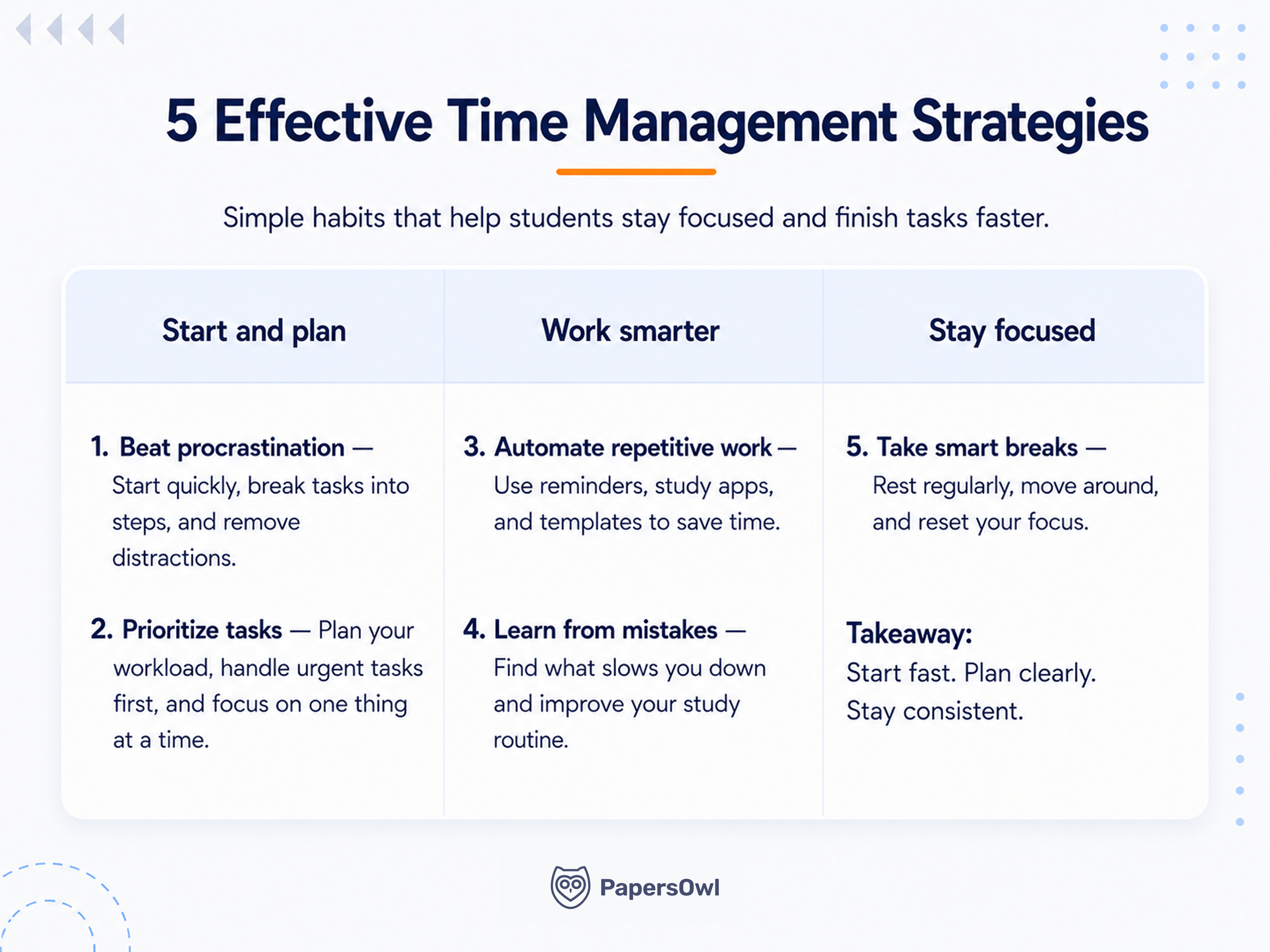
1. How to beat procrastination
Procrastination usually starts small. You delay for a few minutes, then lose more time. The best way to stop it is to begin fast and make tasks feel easy.
Try these simple methods:
- Use the 5-minute rule and just start.
- Break work into tiny, clear steps.
- Set a fixed start time, not “later.”
- Remove your phone before you begin.
- Reward yourself after finishing parts.
Starting is the hardest step. Once you begin, it becomes easier to continue.
2. How to prioritize tasks
Not all homework is equally important. Some tasks are urgent. Others take more time. You need a clear order.
A simple way to prioritize:
- Do urgent tasks first.
- Start with hard tasks when energy is high.
- Finish small tasks quickly.
- Group similar subjects together.
- Focus on one task at a time.
- Use a “do my homework” mindset to stay consistent and avoid delay.
This makes work feel more structured. It also reduces stress and confusion.
3. How to automate repetitive work
A lot of study time is lost on small routine tasks. Automation helps save energy for real learning.
You can automate:
- Reminders using Google Calendar.
- Daily or weekly study schedules.
- Note organization in apps like Notion.
- Essay templates for writing faster.
- A calculator usage for repeated math homework.
- Saving sources in Google Scholar or JSTOR.
These tools reduce thinking overload. They also make studying smoother.
4. How to learn from mistakes
Mistakes are normal. The key is not repeating them. If something went wrong, adjust your system.
You can:
- Check what caused delays.
- Fix missing notes right away.
- Ask classmates for clarification.
- Improve your next study plan.
Small corrections build better habits over time.
5. How to take breaks that improve focus
Breaks are not wasted time; they help your brain reset. Good habits include:
- Short breaks every 25–45 minutes.
- Standing up or stretching.
- Stepping away from screens.
- Resting your eyes briefly.
Balance keeps your energy stable. Without breaks, focus drops quickly.
So, good time management should feel simple. Start fast, plan clearly, and remove unnecessary effort.
How to Take Control of a Physical and Mental State
This part of the homework is often ignored, but it matters a lot.
Accordingly, taking care of yourself is part of studying. A balanced body and mind make learning easier and faster. Without it, concentration drops quickly.
Stress relief tips that actually work
Stress builds up quietly. It makes it harder to think clearly and stay motivated. That is why small daily habits are important.
Simple ways to reduce stress include:
- Taking short breaks while studying.
- Breathing slowly for a few minutes.
- Stepping away from your phone.
- Listening to calm or soft music.
- Writing down thoughts to clear your mind.
These small actions help your brain reset. After that, it is easier to return to work.
Relaxation helps you focus better
Relaxing is not wasted time. It helps your brain recover.
Good relaxation habits include:
- Short walks outside.
- Light stretching between tasks.
- Spending time with friends or family.
- Doing hobbies like music or drawing.
- Reading something simple and non-school-related.
Remember, without rest, your attention becomes weaker.
Physical health and energy
Your body affects your mind more than you think. If your body is tired, your focus drops.
Helpful habits include:
- Walking every day for 20–30 minutes.
- Doing simple workouts or stretching.
- Playing sports when possible.
- Drinking enough water.
- Sleeping on a regular schedule.
Movement helps your brain stay active. It also reduces anxiety and mental fatigue.
A balanced student lifestyle
Many students feel better when they join activities outside school. Clubs, sports, or creative groups help reduce pressure.
This can include music clubs, photography, volunteering, or academic groups like coding. These activities give your mind a break from constant studying. They also help you stay more motivated.

Leverage Technology or How to Focus Correctly
Technology can either help you focus or completely ruin your concentration. It depends on how you use it.
Many students now use AI tools to make homework easier, less stressful, and more organized when they need help to do my homework faster and more efficiently.
Apps like ChatGPT, Notion AI, and Microsoft Copilot help explain difficult topics, summarize long chapters, and organize assignments. They are especially useful when you feel stuck and do not know where to begin.
Many students also use AI to break large assignments into smaller steps. That makes homework feel much more manageable.
Music can help you stay focused
Music is another thing that helps many students concentrate better. Calm background sounds make studying feel less boring and reduce outside distractions.
Students usually choose:
Music without lyrics usually works best because words can pull your attention away from homework.
Some students also use apps like Focus@Will or Brain.fm. These apps create focus music designed specifically for studying.
Focus apps make a big difference
Phones are one of the biggest distractions during homework. You check one message, then suddenly lose twenty minutes.
That is why focus apps became so popular. Apps like Forest and Freedom block social media and reduce interruptions while you study. Even something simple like turning off notifications can maintain focus better.
Some students also explore relevant music essay topics to find inspiration and stay engaged while working with music or creative assignments.
At the same time, too much technology can become stressful. Keeping too many tabs, apps, and videos open usually makes concentration worse.
Do not forget about breaks
Trying to study for hours without stopping rarely works well. Short breaks help your brain recover.
Many students take quick walks, stretch, listen to music, or just step away from screens for a few minutes. Even a short pause can help you come back with better focus.
A Few Final Thoughts
Focusing on homework is a real challenge, especially with modern technology and the pressure of school. But with the right study environment, good time management, and the right strategies, you can improve your ability to concentrate and be productive.
Need extra help or lose focus? You can get reliable academic help. So, in case you want to get guidance, you can always turn to a specialist you trust with a “do my homework for me” request. This is especially helpful when doing complex tasks or working to tight deadlines.
Remember, it’s OK to ask for help. Professionals are available 24/7, and getting help when you need it can keep you on track and achieve academic success and your goals. Stay disciplined and keep your eye on the ball!