
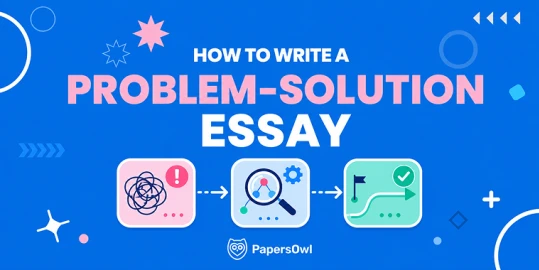
Writing a problem solution essay comes down to one simple move: name a real problem, then convince your reader your solution actually fixes it. I know that sounds easier said than done, so let’s fix that together.
Below, I’ve answered the questions I get asked most—from picking a topic to nailing your conclusion—each in a quick, no-fluff format. Skim the ones you need, or read straight through.
Either way, you’ll leave with a clear plan for your essay.
Your FAQ Guide
What is a problem solution essay?
A problem solution essay identifies a specific problem, then argues for one or more realistic ways to solve it. Think of it like a doctor’s visit: first you describe the symptoms (the problem), then you prescribe treatment (the solution). Your job isn’t just to complain about an issue—it’s to convince your reader your fix will actually work. That’s what separates this essay from a simple opinion piece.
How do you start a problem solution essay?
Start by naming your problem in the very first sentence—don’t bury it. Wrong: “There are many issues facing students today.” Right: “Sleep deprivation is quietly wrecking student grades.” See the difference? The second version gives your reader something concrete immediately. Follow that opening line with one sentence on why the problem matters now, then hint at your solution. You’ve got a hook in three sentences flat.
What is the basic structure of a problem solution essay?
The structure is intro, problem, solution, and conclusion—four clear stops on one road. Your introduction states the problem and previews your fix. The body then splits into two jobs: proving the problem is real, then showing your solution works. Your conclusion ties it back together and often pushes for action. Think of it as a simple recipe: same ingredients every time, just different flavors depending on your topic.
How do you outline a problem solution essay?
Outline it in four blocks: hook and thesis, problem evidence, solution details, and a call to action. Under “problem,” jot down two or three pieces of proof—stats, examples, or expert quotes. Under “solution,” list each fix with one supporting reason underneath it. I always tell students: if you can’t summarize a paragraph in one outline bullet, that paragraph is trying to do too much. Trim it down first.
What is the block method vs. the chain method?
The block method covers all problems first, then all solutions; the chain method pairs each problem with its solution right away. Picture block as two separate boxes—problems in one, solutions in the other. Chain is more like a zipper, alternating problem-solution, problem-solution, all the way down. Shorter essays with one main problem usually work better as a chain. Longer essays with several issues often read cleaner in blocks.
How long should a problem solution essay be?
Most problem solution essays run 500 to 1,200 words, depending on your assignment. A standard five-paragraph version lands around 600–800 words. Research-heavy or multi-solution essays can stretch past 1,000. Always check your prompt first, though—your professor’s word count beats any general rule I can give you. When in doubt, aim for depth over padding; three strong points beat six thin ones every time.
How do you choose a strong topic?
Pick a problem you can actually prove exists and realistically solve within your word count. Wrong: “How to end poverty.” Right: “How to reduce food waste in college dining halls.” The second one is specific, provable, and fixable in 800 words. Choose something you have genuine opinions on, too—it’s much easier to write with conviction about an issue you actually care about.
What are some good problem solution essay topics?
Strong topics are specific, current, and solvable at essay scale—think campus, community, or everyday-life issues. A few to consider: reducing screen time before exams, cutting food waste in dining halls, easing commuter parking shortages, or curbing plagiarism in online classes. Each one names a clear problem and leaves room for a realistic fix. Avoid sprawling global issues; save those for a research paper, not a five-paragraph essay.
How do you write a thesis statement for this essay?
Your thesis should name the problem and preview your solution in one sentence. Wrong: “This essay will discuss campus parking.” Right: “Adding a shuttle service would ease campus parking shortages without costly new construction.” Notice how the second version commits to a specific fix? That’s what makes it a thesis instead of a topic sentence. Keep it to one sentence—save the “why” for your body paragraphs.
What goes in the introduction?
Your introduction states the problem, establishes why it matters, and previews your solution—all in about 100 words. Open with your hook sentence, add one line of context, then close with your thesis. Resist the urge to explain your whole solution here; that’s what your body paragraphs are for. Think of your intro as a movie trailer: enough to hook your reader, not the entire plot.
How many solutions should you include?
One well-developed solution usually beats three shallow ones, but two or three works if your word count allows it. If your assignment calls for multiple solutions, rank them and lead with your strongest. Each solution needs its own paragraph with real support—cost, feasibility, or evidence it’s worked elsewhere. Don’t just list ideas; explain why they’re the right call. Depth is what convinces your reader, not quantity.
How do you write convincing body paragraphs?
Open each paragraph with your point, then back it up with evidence before explaining why it matters. Wrong: starting with a vague claim and never proving it. Right: “Campus shuttles cut late arrivals by 30% at similar schools—proof this solution scales.” Lead with your strongest evidence, not your weakest. And keep paragraphs tight: one idea, one piece of proof, one clear takeaway before you move on.
What belongs in the conclusion?
Your conclusion restates the problem, reaffirms your solution, and ends with a clear call to action. Don’t introduce new evidence here—that belongs in your body paragraphs. Instead, remind your reader why this problem matters and what happens if nobody acts. End on something active: “It’s time colleges piloted shuttle programs” hits harder than “In conclusion, this is an important issue.” Go out strong, not soft.
What transition words work best?
Use transitions that signal cause and shift, like “as a result,” “however,” and “to address this.” These words act like road signs, telling your reader exactly where your argument is turning next. Overusing “also” or “additionally” tends to flatten your essay, so mix it up. My rule of thumb: if a transition feels invisible when you read it aloud, it’s doing its job right.
Do you need evidence or sources?
Yes—credible evidence turns your solution from an opinion into an argument worth trusting. Stats, expert quotes, or real-world examples of similar fixes all count. Wrong: “Everyone knows shuttles help.” Right: “A 2023 campus mobility study found shuttle programs cut late arrivals by nearly a third.” Even one solid source per major claim makes your essay far harder to dismiss. Skip the vague appeals to common sense.
What common mistakes should you avoid?
The biggest one is describing the problem without ever proving your solution works—don’t stop at complaining. Other traps: vague solutions (“raise awareness”), no evidence, and conclusions that just repeat the intro word for word. Watch your word count too; rambling problem sections often crowd out your solution entirely. If your solution paragraph is shorter than your problem paragraph, that’s a sign to rebalance before you submit.
Can you use first person ("I") in this essay?
It depends on your assignment, so check your prompt before assuming either way. Some instructors welcome “I believe” or “I propose” for a more persuasive voice; others expect a more formal, third-person tone throughout. When unsure, default to formal phrasing like “this essay argues” instead of “I think.” It’s a small fix, but it can save you points on essays graded for academic tone.
How do you edit a problem solution essay before submitting?
Read it once for logic, once for evidence, and once for grammar—three passes, three different jobs. First pass: does every solution actually solve the stated problem? Second pass: is each claim backed by evidence, not just asserted? Third pass: grammar, transitions, and word count. I always tell students to read their conclusion right after their introduction—if they don’t match up, something got lost along the way.

Expertise: Essay Writing • Writing Tips • English Grammar
I am an academic writing expert with an MA in Creative Writing and a BA in English Literature. I specialize in breaking down complex literary and academic topics into actionable guides for students. My goal is to help you master linguistic precision and practical writing strategies for academic success.
Expertise: Essay Writing • Writing Tips • English Grammar
I am an academic writing expert with an MA in Creative Writing and a BA in English Literature. I specialize in breaking down complex literary and academic topics into actionable guides for students. My goal is to help you master linguistic precision and practical writing strategies for academic success.